


.svg)
WISeR: What Providers Really Want To Know



Alyssa (Marketing Manager): We have said many times that our team is here to help provider navigate WISeR but folks really want to know how we help them do that. And if we have seen any approvals.
Karlee (Director of Digital Solutions): That's totally fair. Let me walk you through how and why, because understanding the process is what makes our team really be able to help providers.
Alyssa: Fair enough. So, in your words, what exactly is WISeR?
Karlee: WISeR is essentially an AI model designed to review and approve skin substitute claims for Medicare. That's its job—review claims. It's a gatekeeper but not an incredibly clever one. It is simply trying to read your notes and compare the to the LCDs to determine if your request should be approved. It reads what's on the chart and in the LCD and makes a decision based on what's explicitly written.
Alyssa: "Explicitly written" seems like it's been important in your learnings.
Karlee: It's been the biggest lesson, honestly. The AI doesn't do a great job with clinical context. If something isn't spelled out in the notes, it may assume the wrong thing. So if your wound chart implies there's no tunneling, you may have to actually write "no tunneling." It may not be able to deduce there is no tunnelling because of other things you said, or because of the wound type or other clinical clues. If standard of care failed, you have to show it—"first SOC visit this measurement, last visit this measurement, only 8% reduction." The chart notes must tell the whole story by themselves. You can’t leave anything up for interpretation or the tool may get it wrong.
Alyssa: So that sounds fairly strict, but once you know the rules, it's pretty clear.
Karlee: For the most part. You really have to explain exactly what you mean.
Alyssa: Okay, so what's working? What have you learned from submissions so far?
Karlee: We've only tested this in Oklahoma and Texas so far, and both have shown us that providers who understand the model and how you need to word things can get approved. The other learnings are really about state variation and documentation specificity. In Oklahoma, they require what's called a pre-initiation plan. You have to name the specific product you're using, justify why that product, state how often you'll use it, and set a measurable outcome. Like, "I want to use Vendaje AC and I want to see 50% wound reduction in X weeks. I'll apply the product once a week."
Alyssa: And Texas?
Karlee: Texas seems to have less focus on the plan. That's a big difference. Another difference is turnaround times. Oklahoma has been much faster than Texas so far. But both states want the same core things: clarity and documentation.
Alyssa: What isn't working yet?
Karlee: We're still in the calibration phase with the AI. First submissions often come back non-affirmed. But we really want people to know that a first submission non-affirmation is not a failure. That's normal. It's part of the process. You need some back-and-forth to understand what is tripping up the AI.
Alyssa: So a non-affirmed first response doesn't mean the case won't approve?
Karlee: Not at all. It means you resubmit after addressing every denial reason explicitly. We have developed some templates that can help the provider do this. Then we typically see a fresh response in 24 to 48 hours. There's no limit on resubmissions. You keep going until approval.
Alyssa: Walk us through the actual steps a provider would take if they wanted to submit.
Karlee: Start by reviewing the chart and the ICD-10 codes and confirming three things: one, is this actually a DFU or VLU and is it coded that way? Two, does the patient have active Medicare Part B? And three, are they in one of the WISeR states—Oklahoma, Texas, New Jersey, or Ohio? Our team can help with this. We have built our own AI tool which can review your notes for initial gaps and address those before you start. We always set up an initial call with the provider or their administrator to make sure they understand what needs to be submitted.
Alyssa: Why is that initial call so important?
Karlee: Because we want to set expectations. We're going to tell them that a non-affirmed first response is normal and expected. We're going to explain how the AI works and why it needs such explicit detail. And we're going to make sure they're submitting a solid case. That conversation prevents a lot of frustration down the road.
Alyssa: What happens after submission?
Karlee: If it comes back non-affirmed, we help the provider understand and address the issues. Because we have built our own AI tool, and because of our experience with WISeR now, we can usually offer some helpful insight into what is actually tripping things up.
Alyssa: Then you resubmit?
Karlee: You resubmit, and yes, the typical turnaround is 24 to 48 hours. Though every case is different.
Alyssa: How long does the whole process typically take?
Karlee: From initial submission to approval, we're looking at about an extra week. It depends on the state and how many resubmissions are needed. Oklahoma has been faster than Texas in our experience so far.
Alyssa: So a provider could submit and be approved within a week?
Karlee: That's the goal. We've definitely seen it done in that timeframe. We've also seen cases that took a couple of resubmissions, which extends it slightly. But the point is—it's a defined process with a clear endpoint.
Alyssa: Let's talk about something else I think providers wonder about. This all sounds great on paper, but what if a provider hits a wall? What if they get multiple non-affirmed responses?
Karlee: Then we keep resubmitting. There's no limit. You also can ask for human review although we have not needed to do that very often. And honestly, because we're all learning what the AI responds to, each resubmission gets sharper. We know more about what works and what doesn't. We're not flying blind anymore.
Alyssa: Talk a bit about how providers can become exempt from WISeR altogether?
Karlee: Yes. Once a provider hits roughly an 80% plus affirmation rate, they can earn an exemption. So the system is designed so that providers who consistently submit solid documentation don't have to keep going through the process.
Alyssa: That makes sense. It rewards the providers who get it right routinely. Now onto a question that is on every provider’s mind: If a provider goes through this whole process and gets an affirmed claim, will they get paid?
Karlee: Yes, that is how the system is set up to work. You get a UTN prior auth number that goes on your claims and tells the system that the applications were reviewed and approved. Our most recent approval was paid in full and on time.
Alyssa: Just like that?
Karlee: Just like that. The provider submitted, understood the process, worked through the resubmissions, got approved, and the payment came through. No surprises.
Alyssa: So the message for providers is what, exactly?
Karlee: Approval is absolutely achievable. Understand that the AI is literal—it needs explicit documentation. Be patient with the first non-affirmed response. Partner with us. We'll help you through the process. And we will help you ensure skin substitutes can remain a viable treatment for your patients and revenue stream for your practice.


Categories
What We're Seeing: AI Note Review Tool Provides Clinical Note Insights
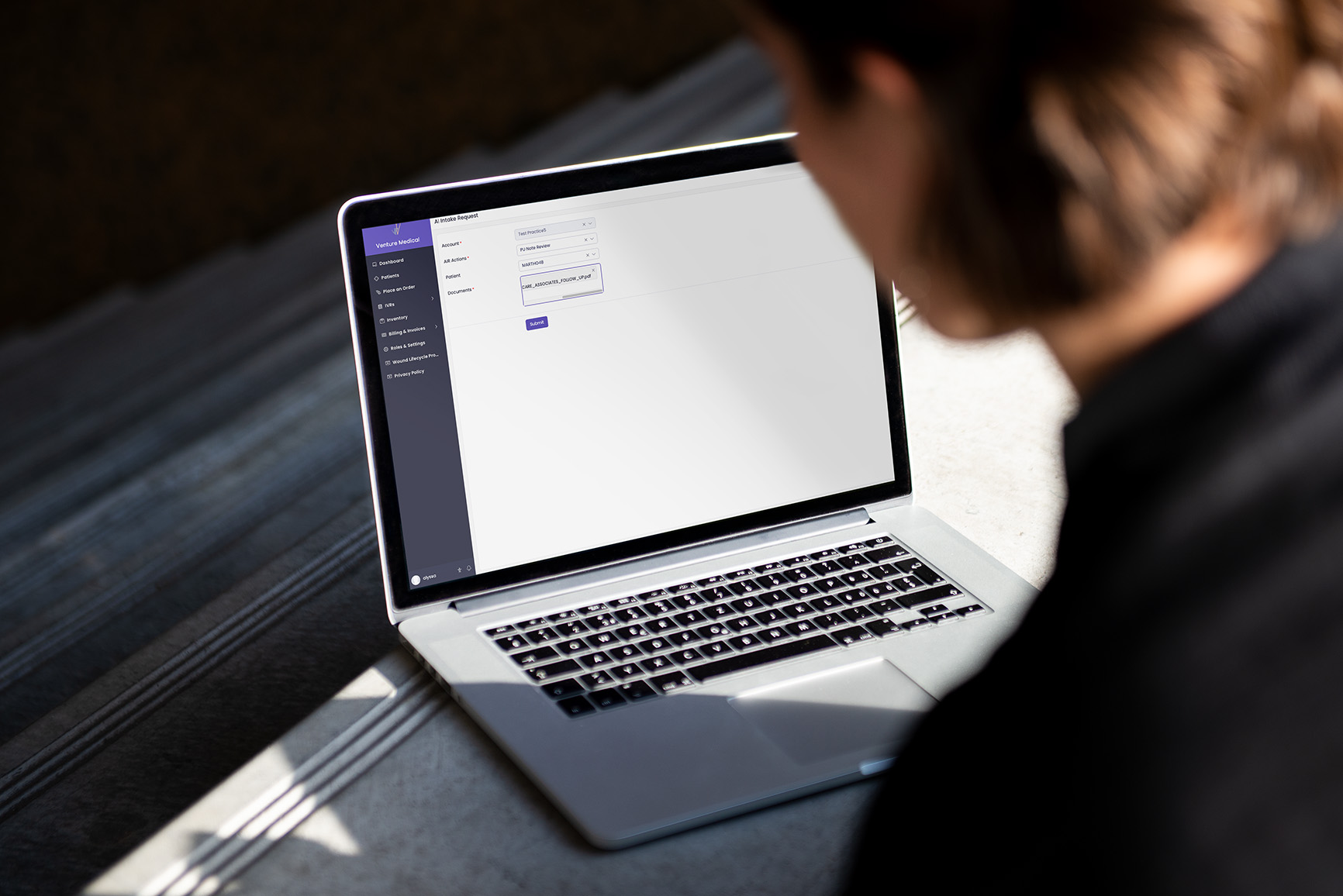
Since rolling out AI powered note review, we've been checking standard of care documentation against payer policy on every case, and the same three gaps keep coming up: vascular assessment that's incomplete or missing, contraindications that were treated but never documented as resolved, and conservative care periods that don't fully hold together on paper. The encouraging part is that the care itself is almost always solid. It's the note that doesn't quite prove it, and that's a much easier fix.
Venture Medical and Plasmacure Explore the Future of Cold Plasma at IPAWS
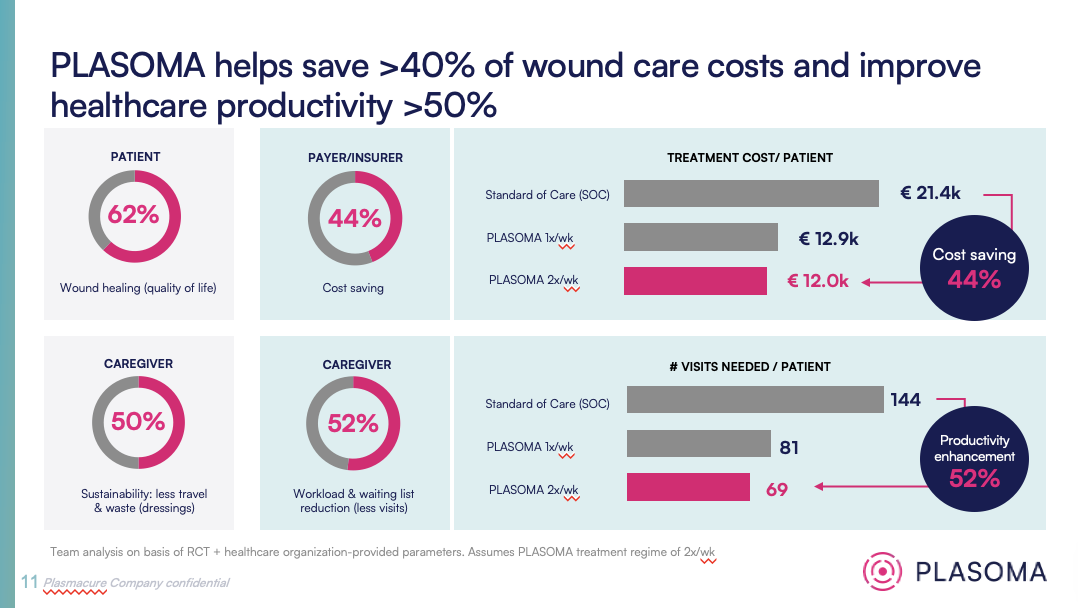
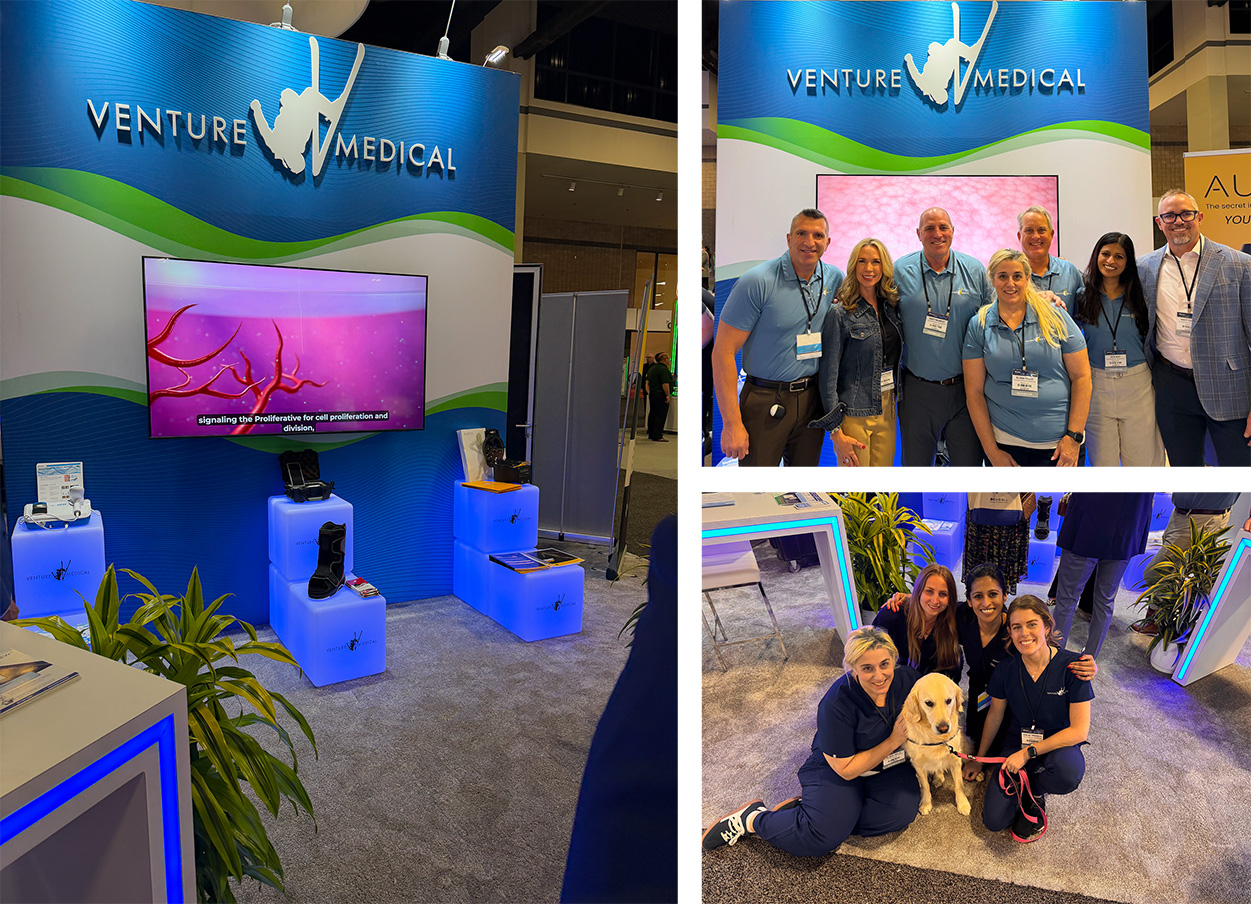
Venture Medical and Plasmacure recently came together at IPAWS in New Orleans to introduce wound care professionals to PLASOMA® and explore the potential role of cold atmospheric plasma in the future of advanced wound care in the United States.


Navigating WISeR: What Wound Care Providers Need to Know and How Venture Medical Can Help
The WISeR Model is here, and it's changing the way wound care providers submit and manage their Medicare claims. Learn what WISeR means for your practice, why accurate documentation is more critical than ever, and how Venture Medical is working hand-in-hand with providers to navigate the process with confidence.

How Venture Medical Is Helping Providers Build Practices That Last
Venture Medical remains committed to being a long-term partner to providers by giving them the strategies and tools they need to build sustainable, resilient practices for the long haul.Venture Medical's ongoing 2026 webinar series is focused on helping wound care providers build practices that can absorb disruption rather than react to it. Learn more about this webinar series and watch the recaps of the sessions you might have missed.

Why Defensible Documentation Is the Most Important Business Decision You Will Make in 2026
In an era of tightening payer scrutiny and rising audit activity, the practices that thrive will be the ones that treat documentation as a clinical and operational standard, not an afterthought. This blog breaks down what medical necessity really means, what "defensible" documentation looks like, and how the right workflows and technology can make excellence achievable every single day.


Missoula, Montana