


.svg)
Wound Care AI Overload: Is it all Hype, or the Future?



The difference today versus a year ago walking the vendor booths at a trade show is striking. Already overwhelming with nicely dressed folks trying to engage you in conversation or to ply you with a delicious coffee drink to spend time in their booth, now clinicians are given whiplash with promises of AI saving their practice. Some vendors are there to “help” others stitch AI into their platform, others say they can handle your dictation, scheduling, AR, you name it. We had a lot of those conversations this week; part of our team just returned from a conference where AI was the topic in almost every conversation. New vendors promising that AI will revolutionize clinical and administrative workflows are popping up like weeds.
We have spent a large part of the last year working out how AI can actually benefit the wound clinicians we work with. We have our own thoughts about this (more on that soon). In the meantime, though, we should take a look at what the data says.
Health care is far from the only area where the promises and pitfalls of AI are not yet clear. A Harvard Business School experiment with 758 Boston Consulting Group consultants found AI users completed tasks 25% faster with 40% higher quality —but only on those tasks AI was actually good at. On tasks outside AI's competence, users performed 19% worse than those working unassisted, because they trusted the machine when they shouldn't have.¹
A nationally representative U.S. survey by researchers at Harvard and the St. Louis Fed estimated that AI saves the average user just 2.2 hours per week—real, but hardly transformative.² And when Upwork surveyed 2,500 workers across the U.S. and U.K., 77% said AI had actually increased their workload, largely from time spent learning new platforms and reviewing AI output.³
Data from Europe reinforces the US pattern. A study of over 12,000 EU firms found AI boosted labor productivity by 4% on average—but only where organizations invested in talent development and process redesign. Those that simply bolted AI onto existing workflows saw negligible gains.⁴ EY's 2025 European AI Barometer exposed a telling gap: 57% of managers believe AI enhanced their team's productivity, while only 35% of the employees actually doing the work agree.⁵
If workers across industries are still struggling to convert AI into consistent productivity gains, wound care clinicians should be skeptical of any vendor claiming a new platform will magically transform their practice. AI's gains are real but conditional—on targeting the right tasks, adequate training, and a willingness to redesign workflows rather than layer technology on top of broken ones.
_________________________________________________________________
¹ Dell'Acqua, F. et al., "Navigating the Jagged Technological Frontier," HBS Working Paper No. 24-013 (Sept. 2023). https://www.hbs.edu/faculty/Pages/item.aspx?num=64700
² Bick, A., Blandin, A. & Deming, D., "The Rapid Adoption of Generative AI," Fed. Reserve Bank of St. Louis Working Paper 2024-027C (rev. Feb. 2025). https://www.stlouisfed.org/on-the-economy/2025/feb/impact-generative-ai-work-productivity
³ Upwork Research Institute, "From Burnout to Balance" (July 2024). https://www.upwork.com/research/ai-enhanced-work-models
⁴ Betz, F. et al., "How AI Is Affecting Productivity and Jobs in Europe," CEPR VoxEU (2025). https://cepr.org/voxeu/columns/how-ai-affecting-productivity-and-jobs-europe ⁵ EY European AI Barometer 2025. https://www.ey.com/en_ch/insights/ai/ey-study-european-ai-barometer-2025


Categories
What We're Seeing: AI Note Review Tool Provides Clinical Note Insights
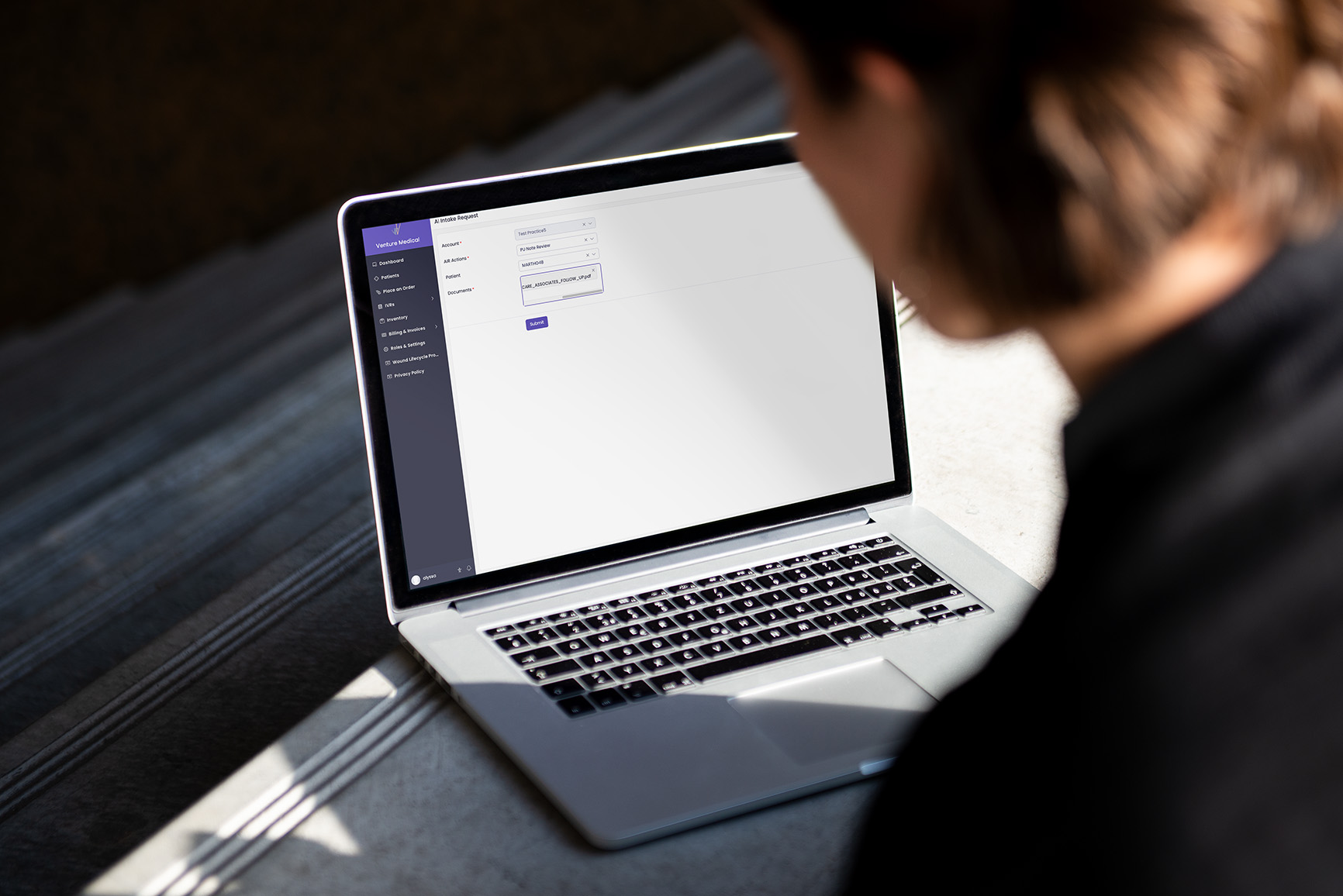
Since rolling out AI powered note review, we've been checking standard of care documentation against payer policy on every case, and the same three gaps keep coming up: vascular assessment that's incomplete or missing, contraindications that were treated but never documented as resolved, and conservative care periods that don't fully hold together on paper. The encouraging part is that the care itself is almost always solid. It's the note that doesn't quite prove it, and that's a much easier fix.
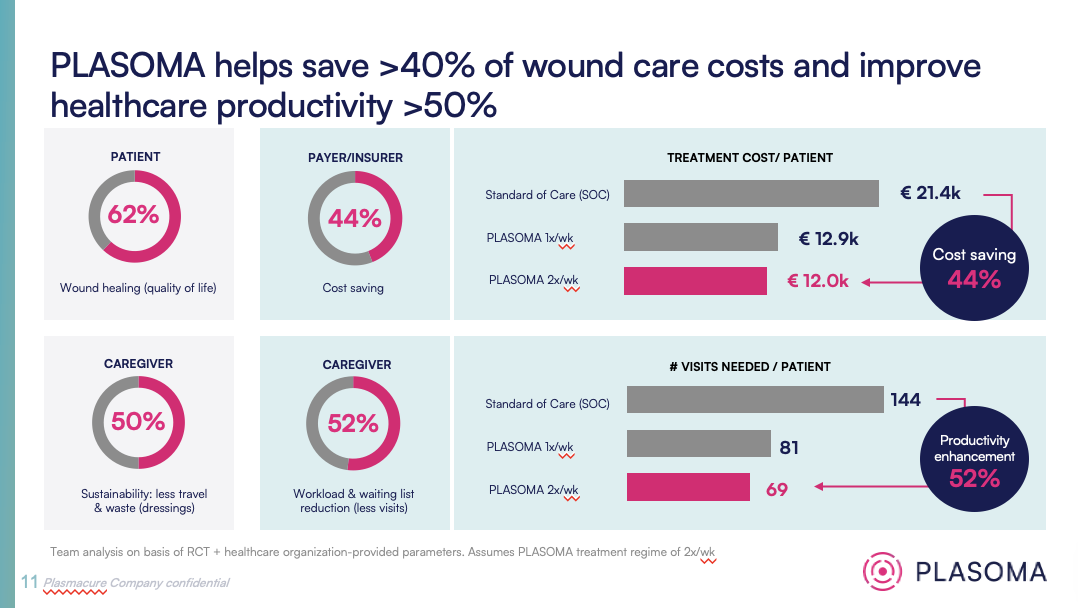
Venture Medical and Plasmacure Explore the Future of Cold Plasma at IPAWS
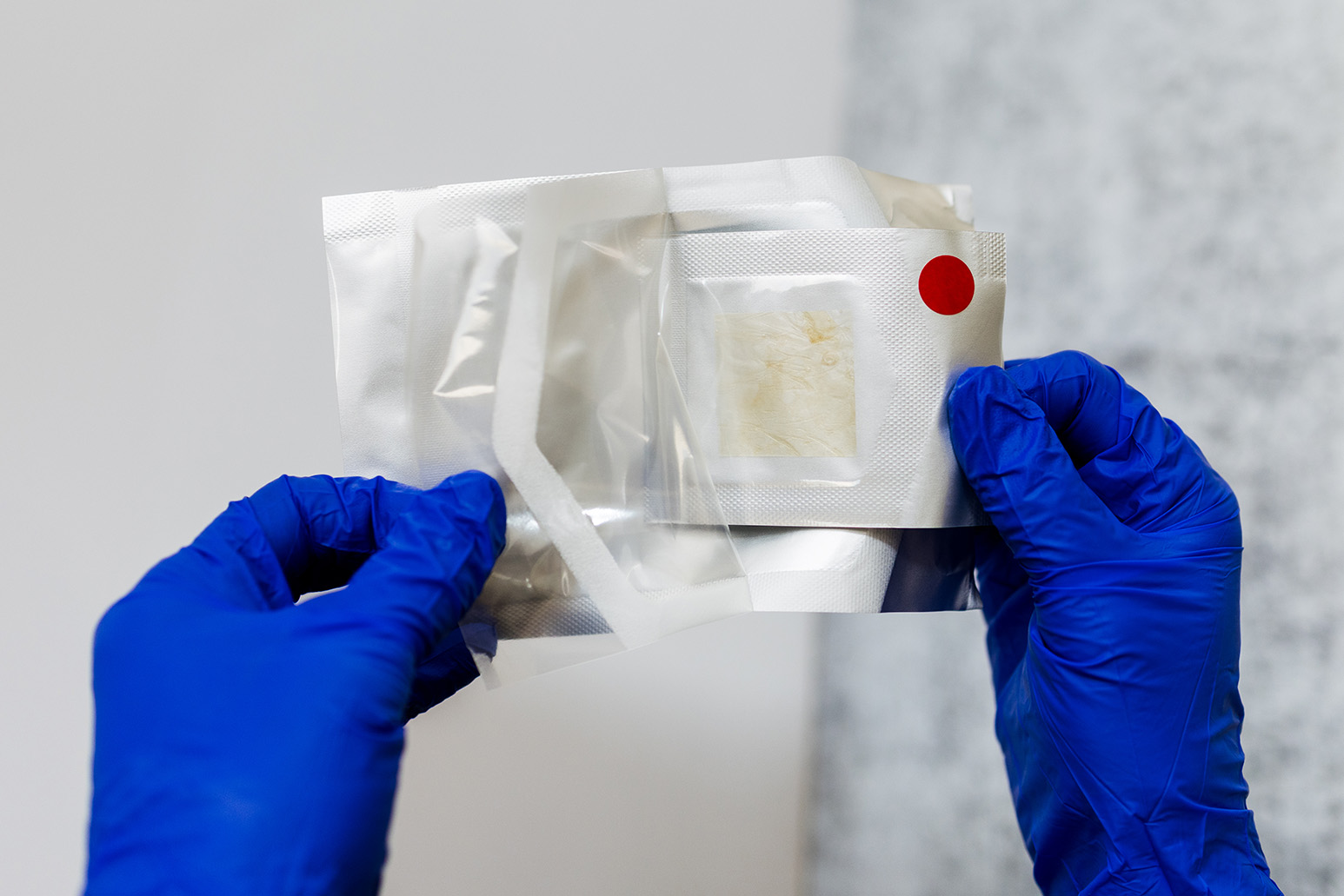
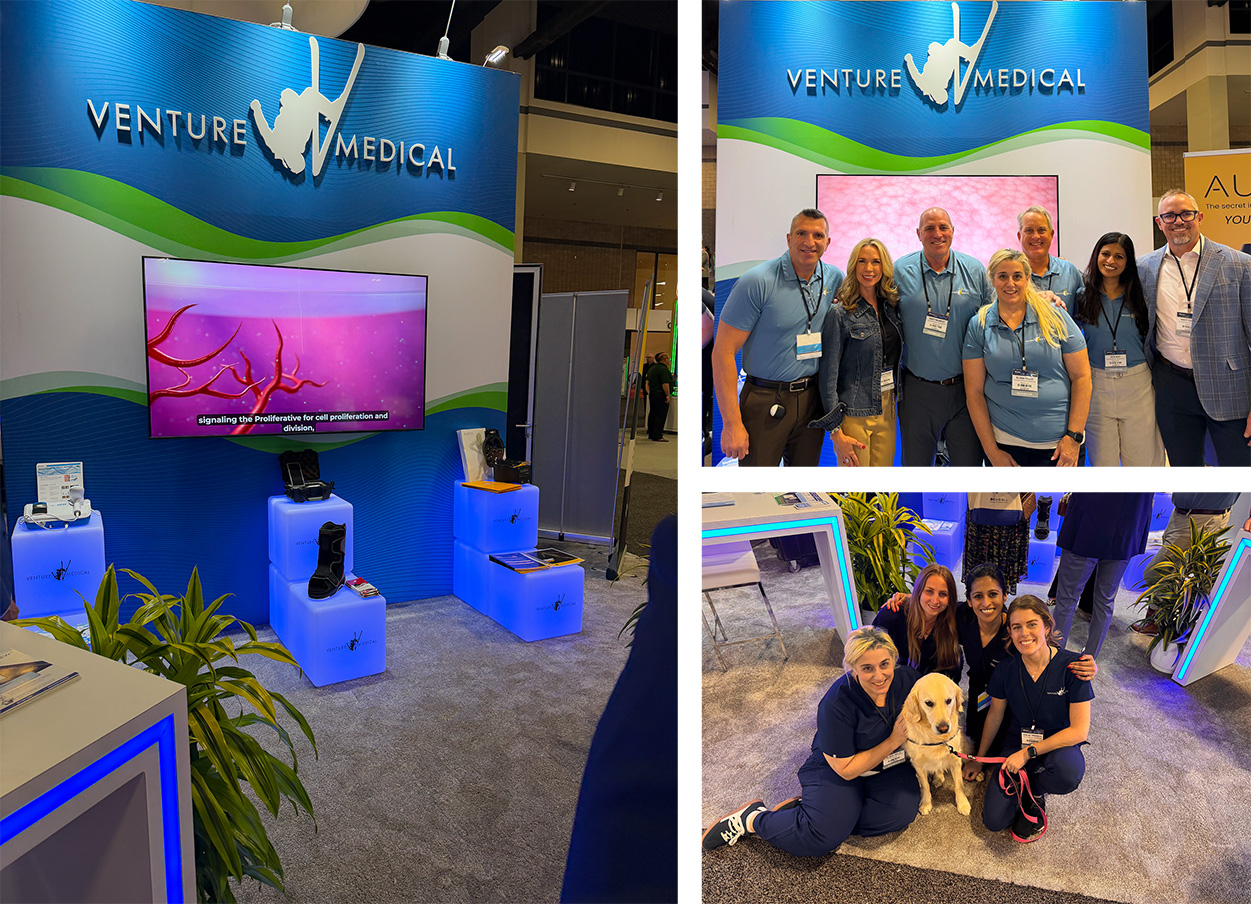
Venture Medical and Plasmacure recently came together at IPAWS in New Orleans to introduce wound care professionals to PLASOMA® and explore the potential role of cold atmospheric plasma in the future of advanced wound care in the United States.


Navigating WISeR: What Wound Care Providers Need to Know and How Venture Medical Can Help
The WISeR Model is here, and it's changing the way wound care providers submit and manage their Medicare claims. Learn what WISeR means for your practice, why accurate documentation is more critical than ever, and how Venture Medical is working hand-in-hand with providers to navigate the process with confidence.

How Venture Medical Is Helping Providers Build Practices That Last
Venture Medical remains committed to being a long-term partner to providers by giving them the strategies and tools they need to build sustainable, resilient practices for the long haul.Venture Medical's ongoing 2026 webinar series is focused on helping wound care providers build practices that can absorb disruption rather than react to it. Learn more about this webinar series and watch the recaps of the sessions you might have missed.

Why Defensible Documentation Is the Most Important Business Decision You Will Make in 2026
In an era of tightening payer scrutiny and rising audit activity, the practices that thrive will be the ones that treat documentation as a clinical and operational standard, not an afterthought. This blog breaks down what medical necessity really means, what "defensible" documentation looks like, and how the right workflows and technology can make excellence achievable every single day.


Missoula, Montana